Here's everything you need to fill that form: Name The Garden Office in Cumbria: Why a Spare Room Doesn't Cut It
.jpg)
Working from home was supposed to get easier. For most people, it hasn't, not entirely. The kitchen table gets old. The spare bedroom never quite feels right. Noise from the rest of the house bleeds in, and the line between work and home gets blurrier the longer you share the same four walls with both. A lot of people in Cumbria put up with this for longer than they should, convinced that a proper workspace is an extravagance rather than a practical decision. It isn't.
A purpose-built garden office changes the dynamic entirely, and in a region like this one, where properties often have the outdoor space to make it work, it's one of the most sensible investments you can make in how you live and how you work.
The Problem with the Spare Room
We hear the same thing regularly on site visits. Someone has converted the spare bedroom into an office. It works on paper, but in practice it's still a bedroom with a desk in it. The heating was never designed for a room in use all day, the acoustics are wrong, and psychologically, you're still inside the house, still accessible, still reachable by whoever else is in it.
Research consistently shows that physical separation from the main house is one of the biggest factors in remote working productivity. It's not just about having a desk or a door that closes. It's about the five-second commute across the garden, the threshold you cross, the shift in headspace that happens when the workspace is genuinely distinct from the living space. A spare room, however well set up, can't replicate that.
According to ONS data from 2024, 28% of working adults in Great Britain were hybrid workers. That figure rises considerably among the 30to 49 age group and among higher earners, which is broadly the demographic buying property in Cumbria. This isn't a temporary trend. It's structural. And the workspace at home has to be built to match it.
What a Garden Office Actually Needs to Do
A garden office in Cumbria has to perform differently to one in a more sheltered part of the country. The climate here is wetter, colder for longer, and more variable. A structure that isn't properly insulated and properly heated will be uncomfortable for at least six months of the year, which defeats the purpose entirely.
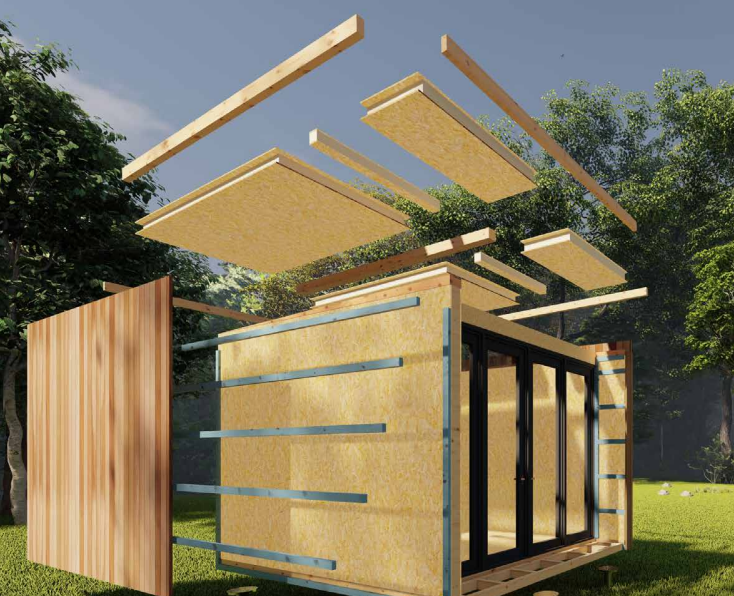
The builds we do are insulated to the same standard as habitable rooms. That means the space is warm in January and not stifling in July. The electrics are installed properly, with enough capacity for multiple screens, a printer, good lighting, and a heating system that responds quickly.The glazing is thermally efficient. The floor doesn't feel cold underfoot. These aren't premium upgrades. They're the baseline for a space that actually works year-round in this part of the world.
Connectivity is worth thinking through at the design stage too. Many rural properties in the Lake District and wider Cumbria are in areas where broadband infrastructure is still catching up. If you're running a business from a garden office, it's worth discussing cabling and connectivity options with your builder before the build starts, not after. It's far easier to run data cable through a fresh structure than to retrofit it later.
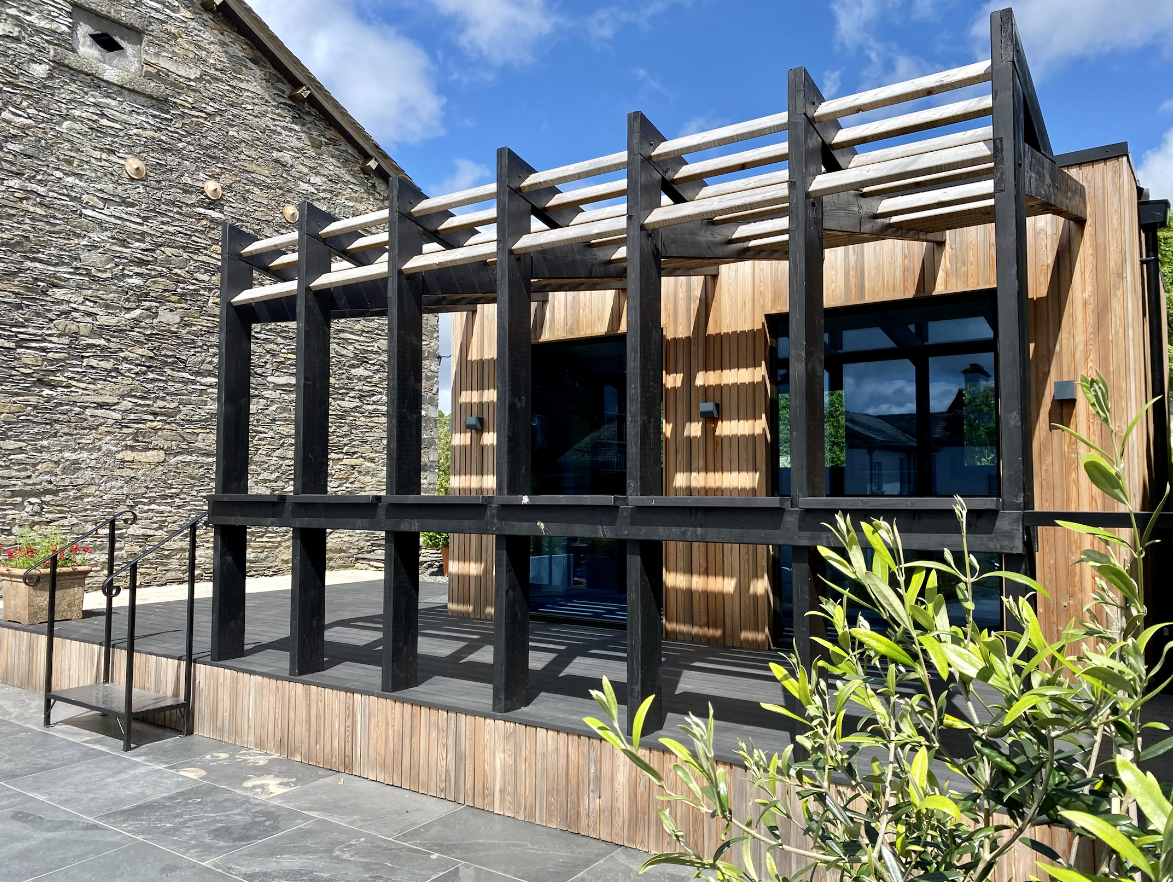
The Scott, Windermere
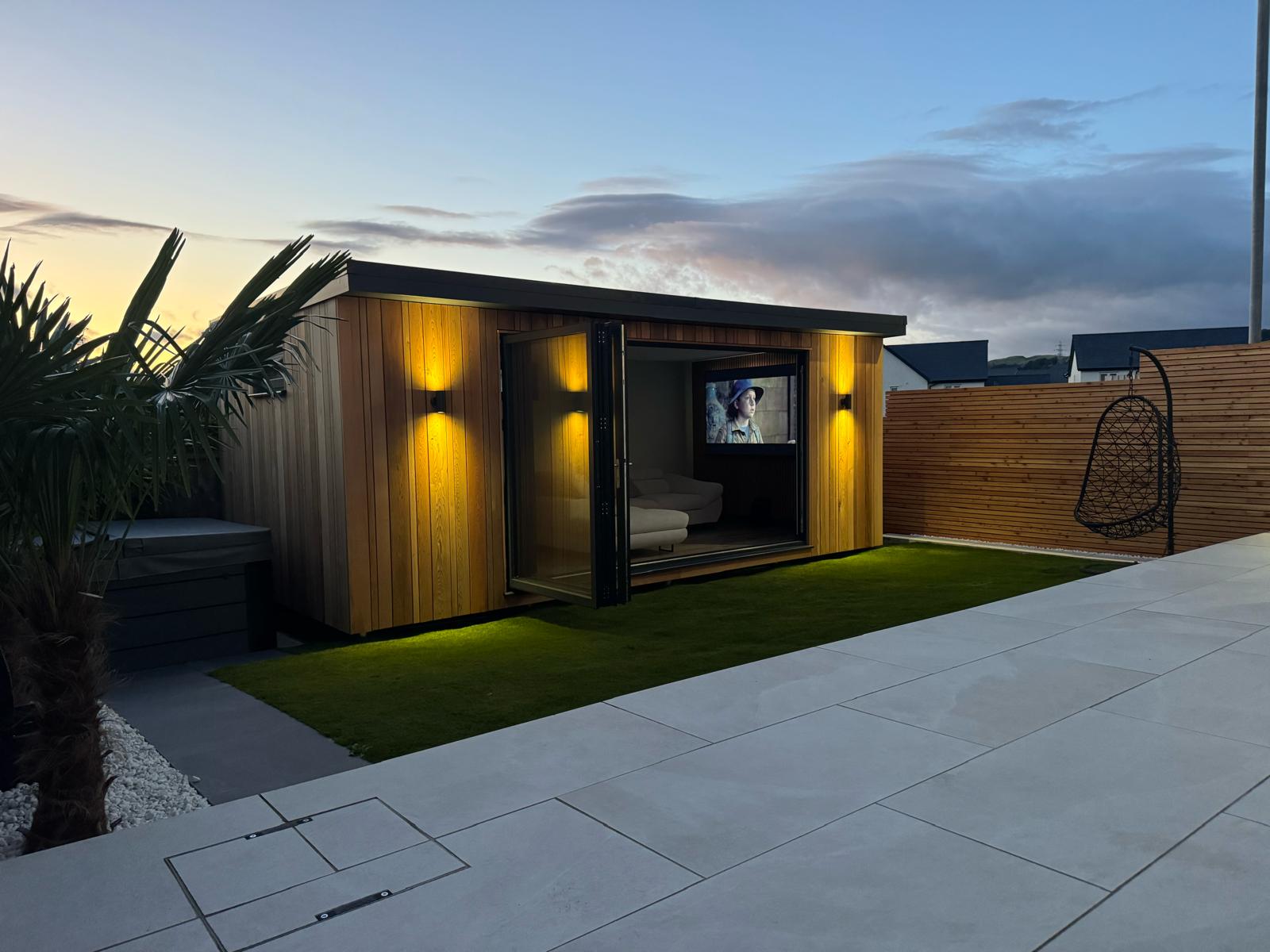
The Scott is a good example of how a garden office can bebuilt for more than one purpose without compromising on either. At 6.5m x 4.2m,it's a considered size: large enough to work properly, not so large that itfeels disconnected from the garden around it.
The brief was for a space that could function as a focused work environment during the day and a professional meeting space when clients visited. That dual purpose was designed in from the start, not tacked on. The layout gives a dedicated office area alongside a bright, open meeting zone. The natural cladding on the exterior and the extended front facade give it real architectural presence in the garden. It doesn't look like an afterthought. It looks like it belongs.
That matters more than people expect. If you're bringing clients to your home, the space they arrive at says something about how you work. The Scott says it clearly.
The Jurd, Kendal
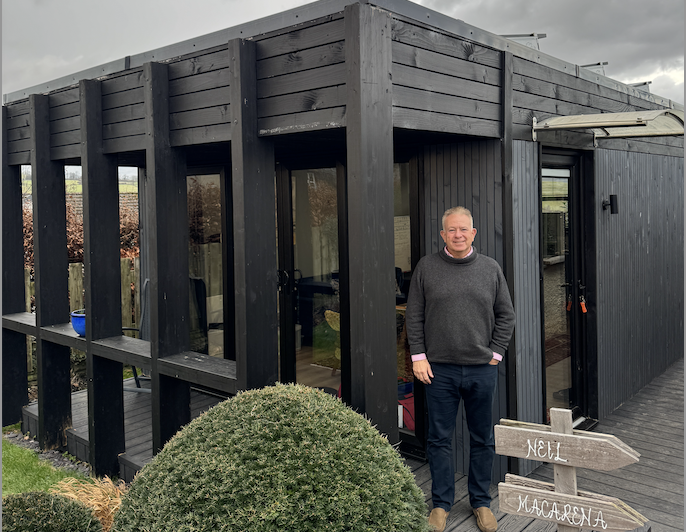
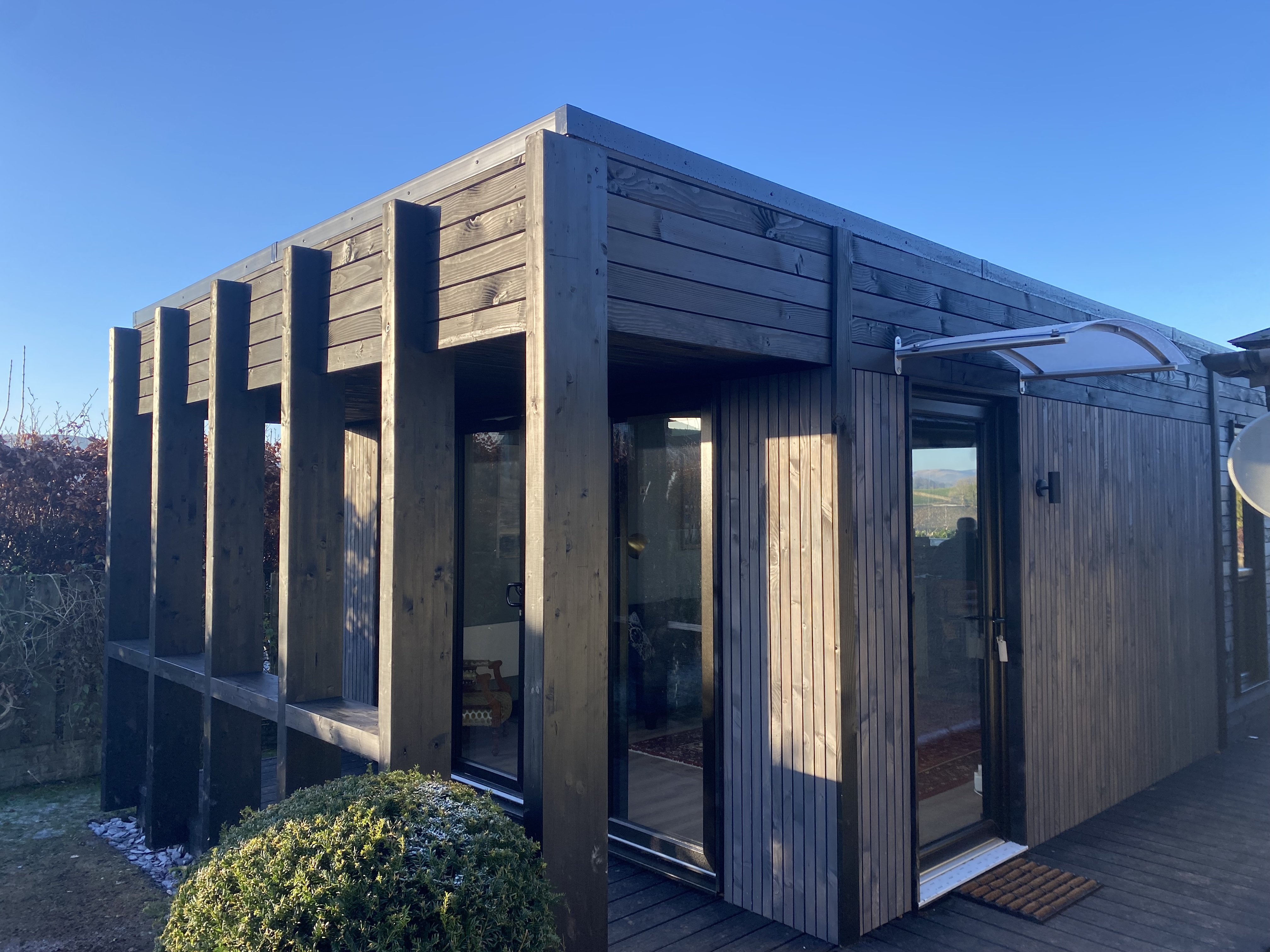
The Jurd takes a different approach to the same challenge.At 6.9m x 4.3m, it's built as a dual-purpose home office and living room snug, the kind of space that shifts from a working environment during the day to somewhere genuinely comfortable in the evening. That flexibility is increasingly what people want, and it makes sense. A 30 square metre structure is a significant investment, and getting more than one function out of it is good thinking.
The scorched timber cladding gives it a bold, charcoal-black exterior that's a long way from the generic cladding options you see on most garden buildings. It sits alongside the existing garage and has real architectural conviction. The integrated solar panels are a practical addition too, reducing running costs and making the long-term economics of the build more straightforward.
What the Jurd demonstrates is that a garden office doesn't have to be a plain box with a window. Bespoke design means the build is shaped around the site, the brief, and what the client actually wants from the space, not around whatever comes off a production line.
The Investment Argument
A properly built garden office adds value on two levels. The first is the practical one: productivity, focus, separation between work and home. The second is the property one. Estate agents consistently report garden rooms adding 5 to 15% to property value, with a quality home office at the upper end of that range given sustained buyer demand for work-from-home-ready properties.
In the Lake District and Cumbrian property market, where buyers are often drawn by lifestyle as much as location, a well-designed garden structure that genuinely functions all year is a meaningful selling point. It's not decorative. It's usable, and buyers can see that immediately.
The cost of avoiding the decision also adds up. Renting desk space, co-working memberships, or commuting regularly into a town or city office all carry ongoing costs with no return. A garden office is a one-off investment that pays back across years, not months.
Why Bespoke Matters in Cumbria
Off-the-shelf garden offices are designed for flat, accessible, standard plots in uncomplicated settings. Cumbria doesn't often offer that. Sloping gardens, restricted access, unusual ground conditions, properties within or adjacent to the Lake District National Park, these are all things that a standard kit build handles badly, if it handles them at all.
A bespoke build starts from the site survey. What does the ground look like? What are the access constraints? What are the planning considerations for this specific property? What orientation gives the best light, the best view, the most useful relationship to the main house? Those questions get answered before a single design decision is made, and they shape everything that follows.
We also build within the National Park regularly, which brings its own planning considerations around materials, height, massing, and finish. If you're not certain what applies to your site, that's a question worth asking early. The right builder will be able to tell you quickly and accurately, because they'll have navigated it before.
The Spare Room Was Never the Long-Term Plan
Most people who work from a spare bedroom or kitchen table know, somewhere, that it's a compromise. It works until it doesn't, and then the lost focus, the interruptions, and the absence of any real boundary between work and home start to take a toll. A garden office solves that problem properly, not temporarily.
Built to the right spec for this climate, designed around how you actually work, and finished to a standard that holds its value, it's one of the more considered decisions you can make about how you use your property. If you work from home properly, the space you work in should work properly too.
If you're thinking about adding a dedicated workspace, we're happy to talk it through. A site visit is always the right starting point.
Read through more articles
Below you'll find a steady stream of new blogs containing a wide array of information & updates. We're also more than happy to discuss any questions or queries via a phone call. Our social pages also have lots of useful videos and walkthroughs by the team.



.JPG)
Ready to imagine your own space?
Book your free, no-obligation design consultation today!
Book Your Consultation