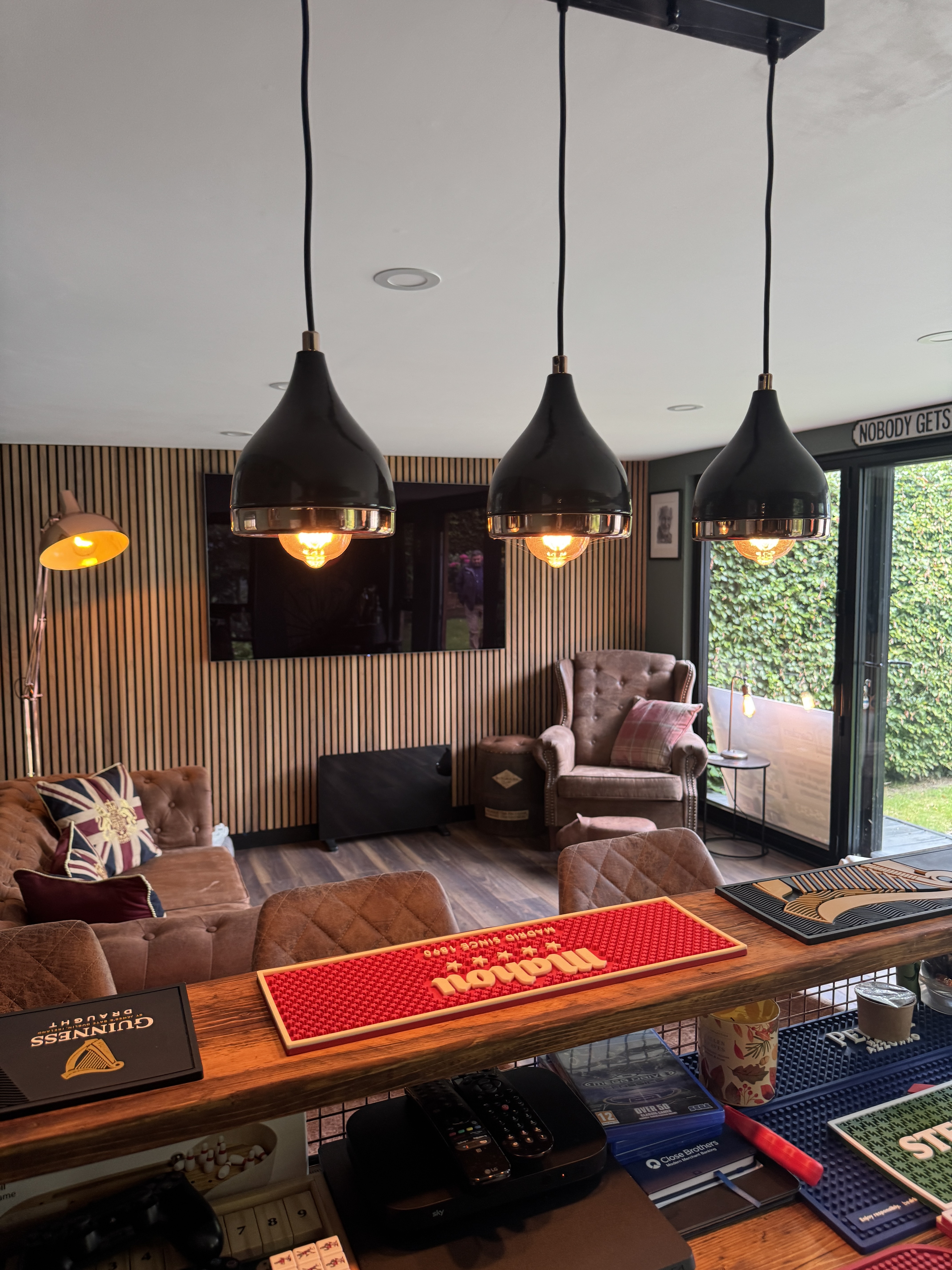
What Does £30,000 Get You in a Garden Room? A Spec Breakdown for Cumbria
£30,000 is the figure most people land on when they start pricing up a garden room. It is a reasonable mid-range budget, but it does not tell you much on its own. What that money actually buys changes depending on the structure, the insulation standard, the glazing, the electrics, the finish, and the ground you are building on. We see this a lot on site: two people quote the same number to each other at a dinner party and end up describing two completely different buildings.
This post breaks down what £30,000 genuinely covers, what changes at £20,000 and £45,000, why the same budget can stretch further or less far depending on where in Cumbria you are building, and what tends to catch people out when they are comparing quotes side by side.
Why the Same Budget Covers Different Things in Cumbria
A lot of national pricing guides assume flat, accessible gardens with easy vehicle access and stable ground. That is not always the reality here. Ground conditions across Cumbria vary hugely, from glacial gravel and clay to upland peat, and a site on a slope above Windermere needs a different foundation approach to a flat plot in Kendal. Access matters too. Narrow lanes, steep driveways and properties set back from the road all affect how materials get on site and what that costs.
None of this is a reason to be defensive about price. It is simply what a proper quote in this region has to account for, and it is one thing we have learned over the years: the quote that looks cheapest on paper is often the one that has not priced in the actual site.
What £30,000 Typically Includes
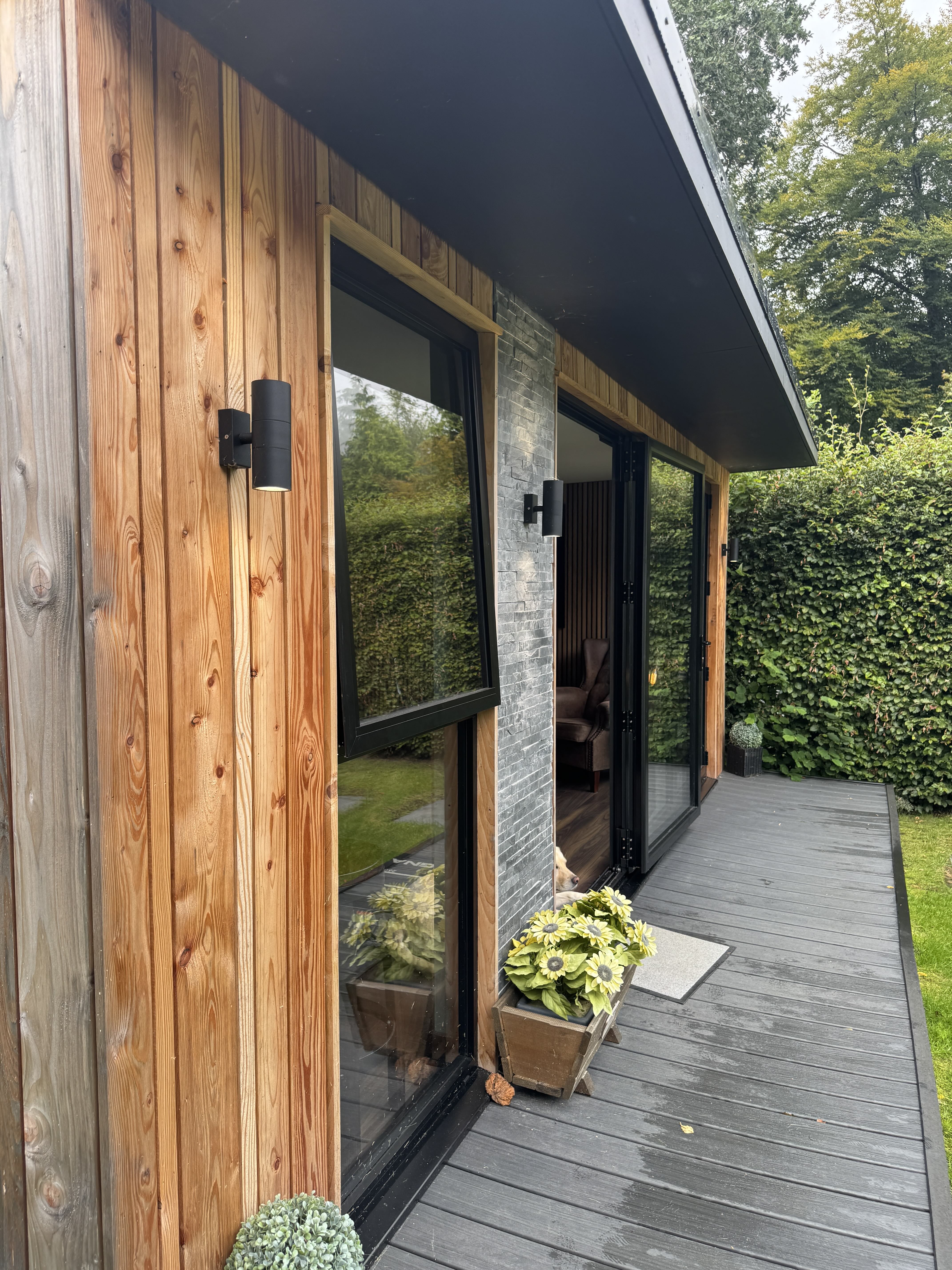
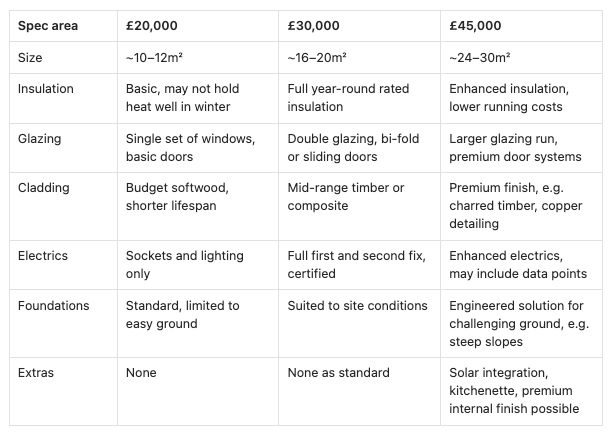
At this budget, you are generally looking at a building in the region of 16 to 20 square metres, fully insulated to a year-round standard, with double glazing, electrics first fix and second fix, and a proper foundation suited to your ground conditions.
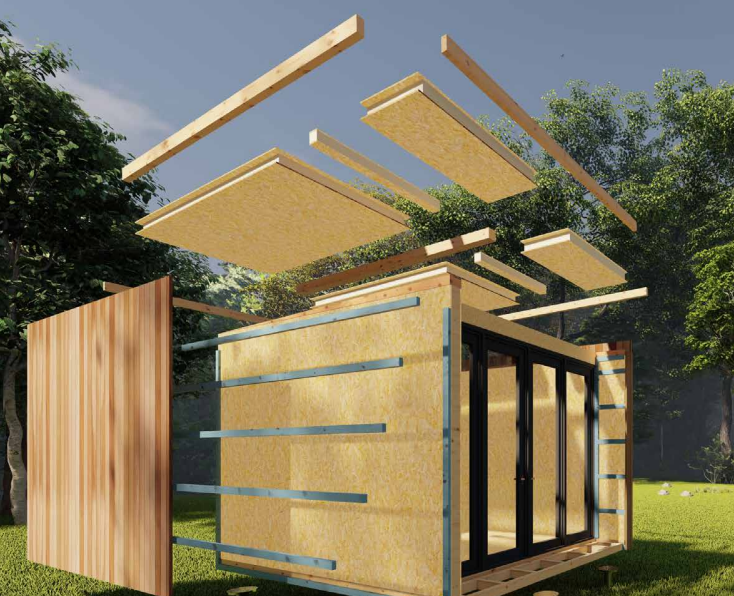
- Structure: timber frame construction, built to last rather than a kit-built shed dressed up as a garden room
- Insulation: full wall, roof and floor insulation rated for year-round use, not just a summer space
- Glazing: double-glazed windows and either bi-fold or sliding doors depending on layout
- Electrics: sockets, lighting, and consumer unit connection, fully certified
- Flooring: a finished floor ready for your covering of choice
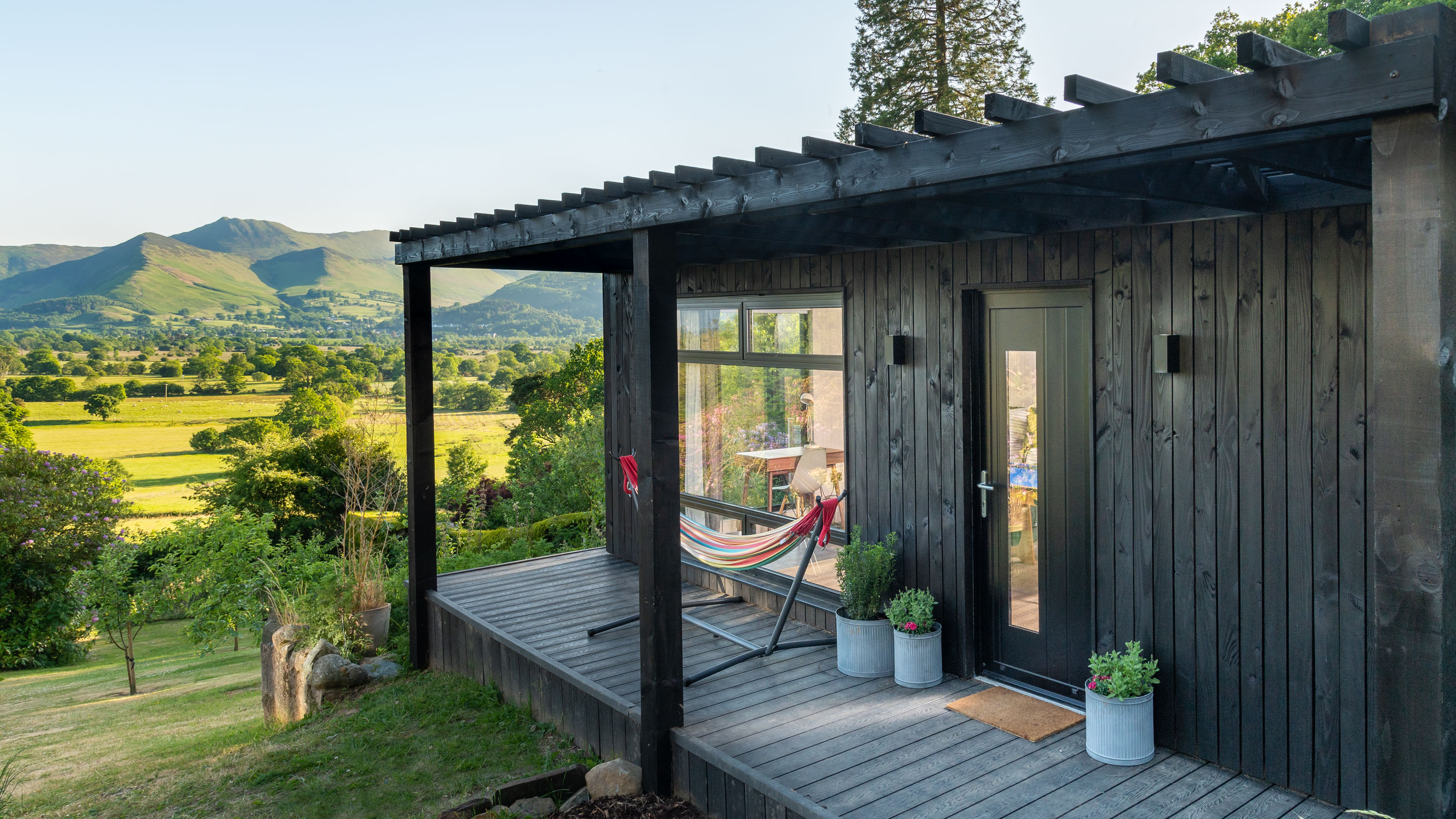
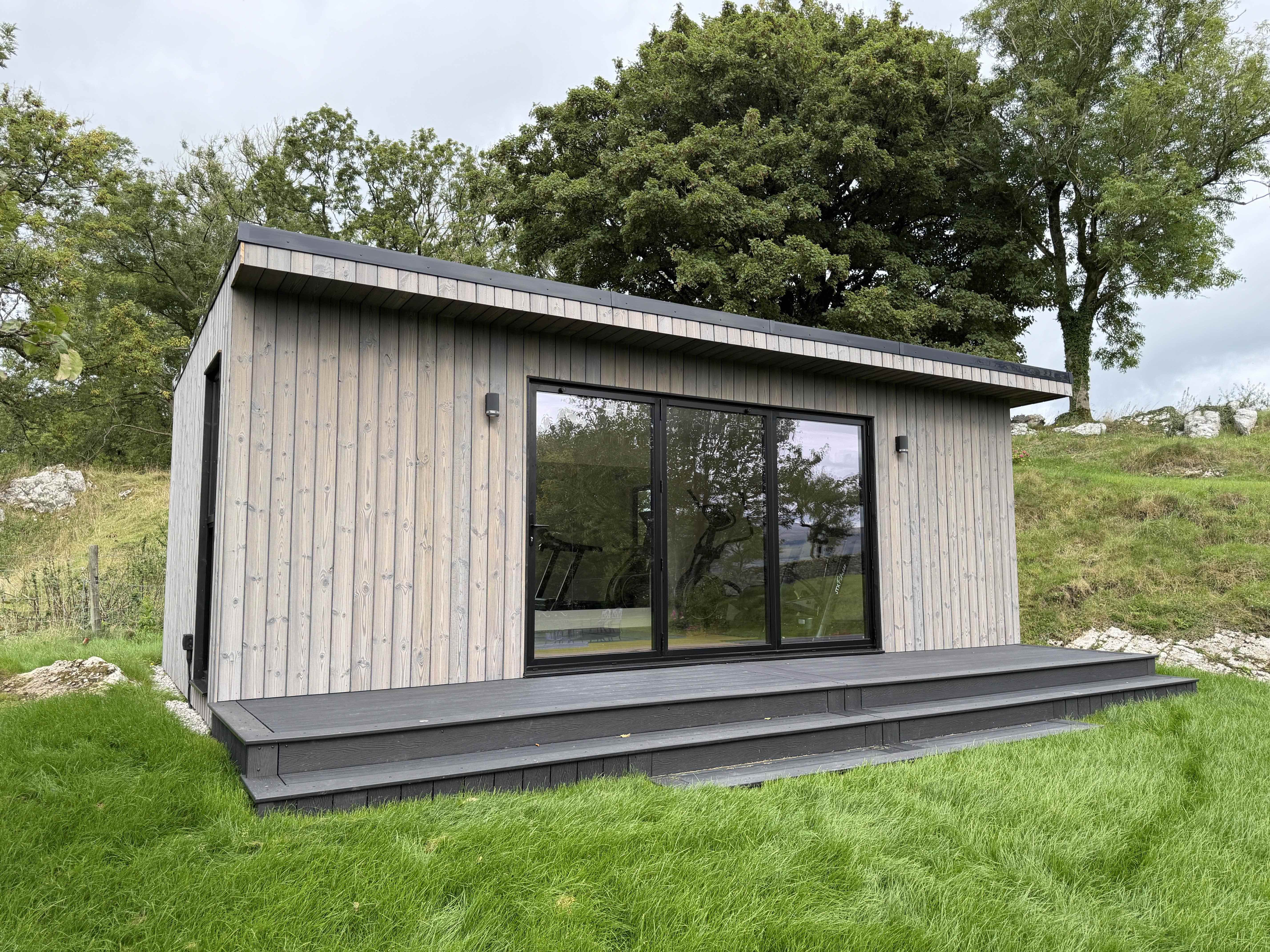
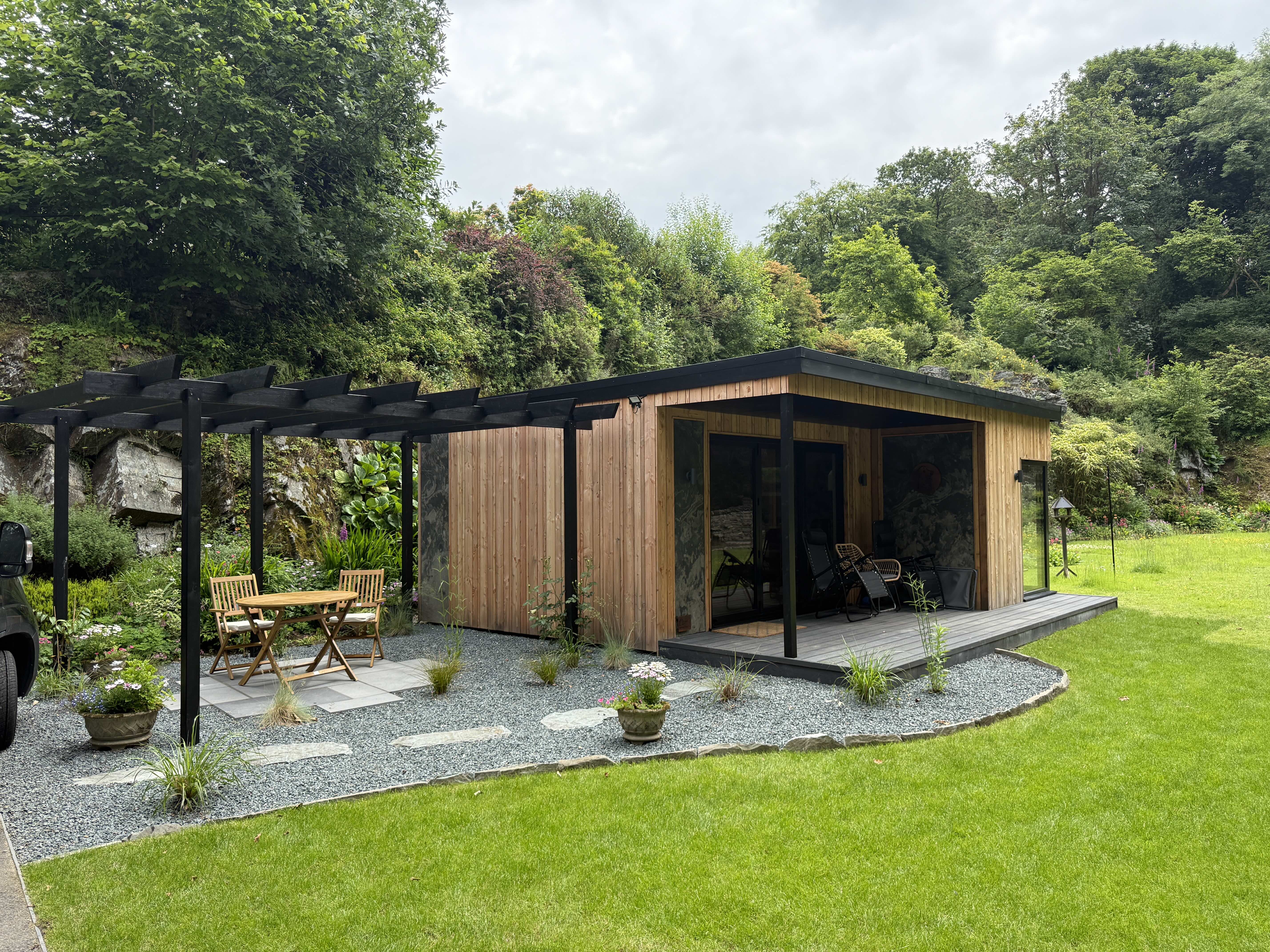
- Cladding: a mid-range natural timber or composite option suited to a wet, exposed climate
- Groundworks: foundation appropriate to your site, whether that is ground screws, a concrete pad, or piers
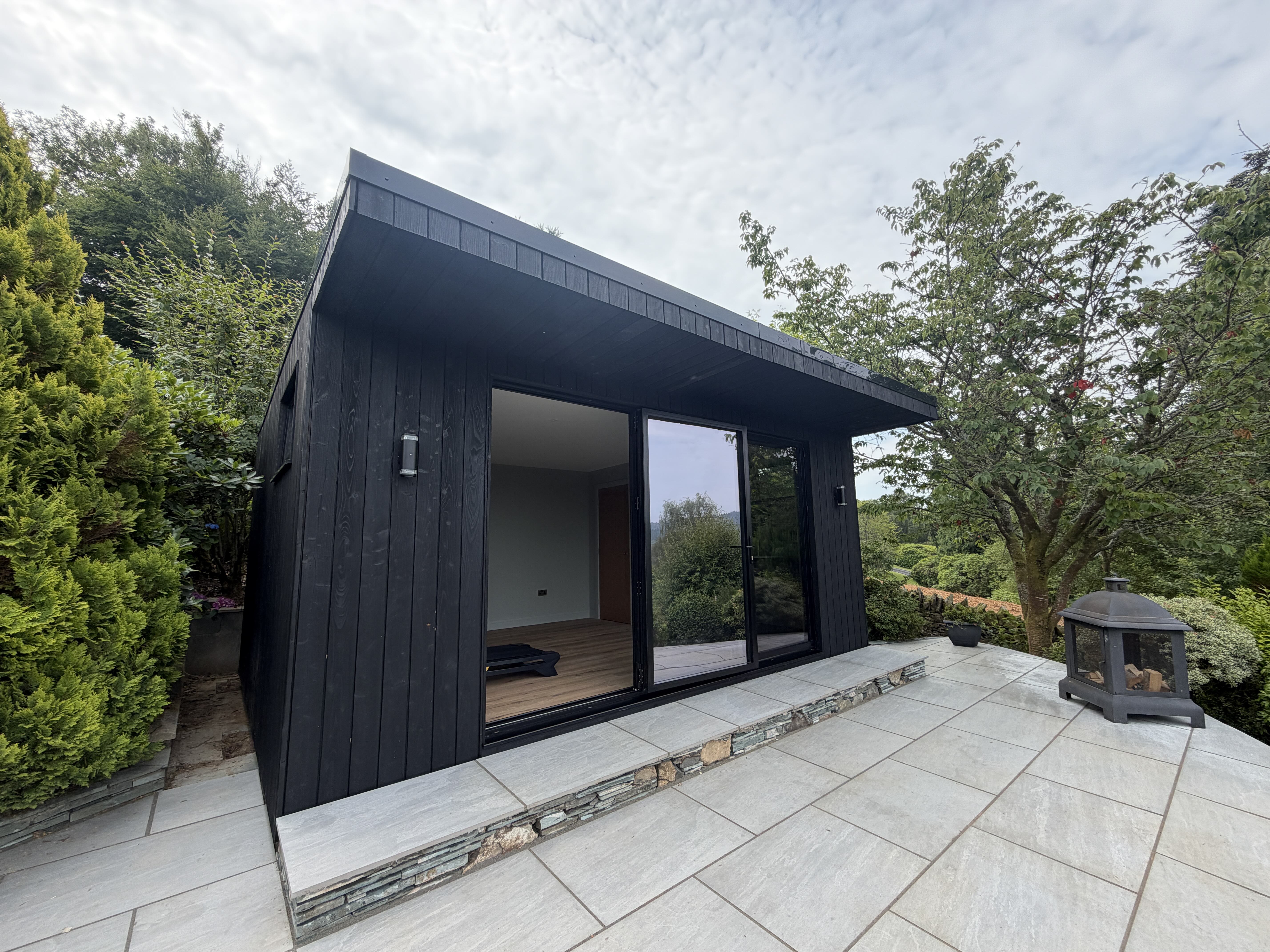
What this budget does not typically stretch to is a large open-plan space with multiple zones, premium cladding such as charred timber with copper detailing, integrated solar, or a fully fitted kitchenette. Those move the project into the £40,000-plus range.
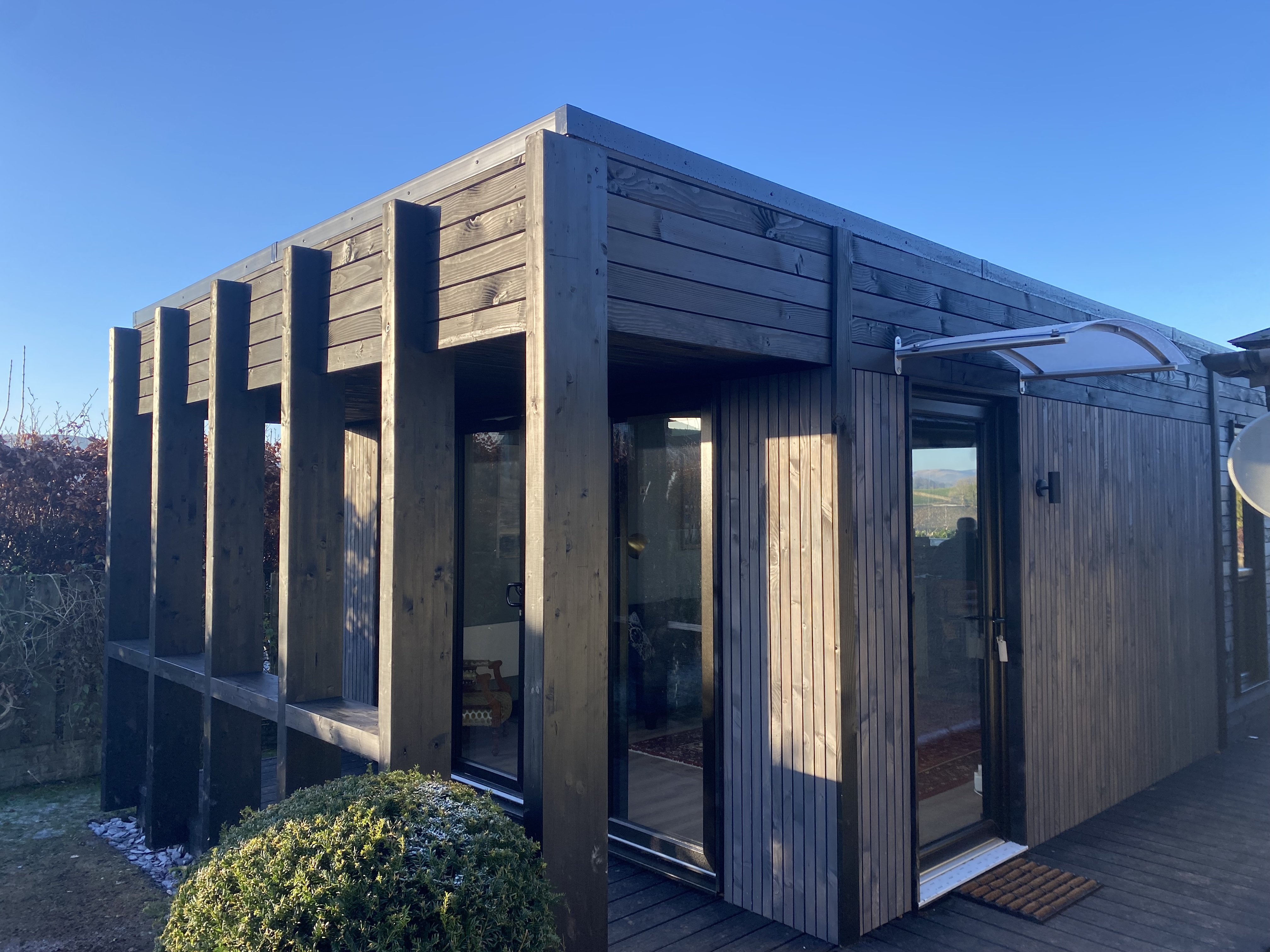
Cladding is one area where the £30,000 spec genuinely matters, and it is worth dwelling on. In a wet, exposed Lake District climate, cheap softwood cladding can start to look tired within a couple of years, whereas a mid-range natural timber or composite option, properly treated and detailed, will comfortably outlast it without the constant upkeep. It is a relatively small percentage of the overall build cost, but it is the part everyone sees first, and skimping here is usually the first place corners get cut on a lower quote.
£20,000 vs £30,000 vs £45,000: A Spec Comparison
Where the Money Actually Goes
Buyers are often surprised by how much of the budget sits below the visible finish. Foundations, insulation and electrics rarely show up in a photo, but they are what determine whether a garden room is usable in January or only in July.
Insulation Is Not Optional in This Climate
A Lake District winter is not forgiving of a poorly insulated build. We have seen garden rooms from other suppliers that look the part but cost a fortune to heat, or simply do not get used between November and March because they are uncomfortable. The insulation standard is one of the first things we will not compromise on, regardless of budget.
Ground Conditions Set the Foundation Cost
A flat, accessible plot with stable ground keeps foundation costs predictable. A sloped garden, soft ground, or a site with limited access will add cost, and a proper site survey before any quote is the only honest way to know where you stand. This is true at every budget level, not just £30,000.
To put that in real terms: a standard concrete pad foundation on flat, accessible ground is the cheapest starting point. Ground screws cost more upfront but suit soft or uneven ground without the disruption of digging and curing concrete, which matters on a smaller garden or where access is tight. A site with a genuine slope, of the kind we deal with regularly above Windermere and Ambleside, often needs an engineered pier foundation or a stepped slab, which can add several thousand pounds depending on the gradient. None of that is a hidden cost. It is simply what the ground demands, and what looks straightforward on a drawing has to actually work once you are standing on the site.
Electrics Are Rarely Optional Either
Certified electrics, properly signed off, are part of what makes a garden room a genuine all-year space rather than a glorified outbuilding. This is not somewhere to cut corners, and any quote that looks unusually low is worth checking against what is actually included. A fully wired build with a separate consumer unit connection, proper circuit protection, and signed-off Part P certification costs more than a basic extension lead run from the house, but it is the difference between a space you can genuinely rely on and one that trips out the first time you run a heater and a kettle at the same time.
Access Costs Are Easy to Miss
This is one we flag early with every client. A property with a wide driveway and clear access to the back garden keeps delivery and groundworks costs low. A property down a narrow lane, up a steep drive, or with a garden only reachable by hand-carrying materials through the house, adds labour time that has to be priced somewhere. We would rather it is priced honestly in the quote from the start than discovered halfway through the build.
What Changes at £45,000
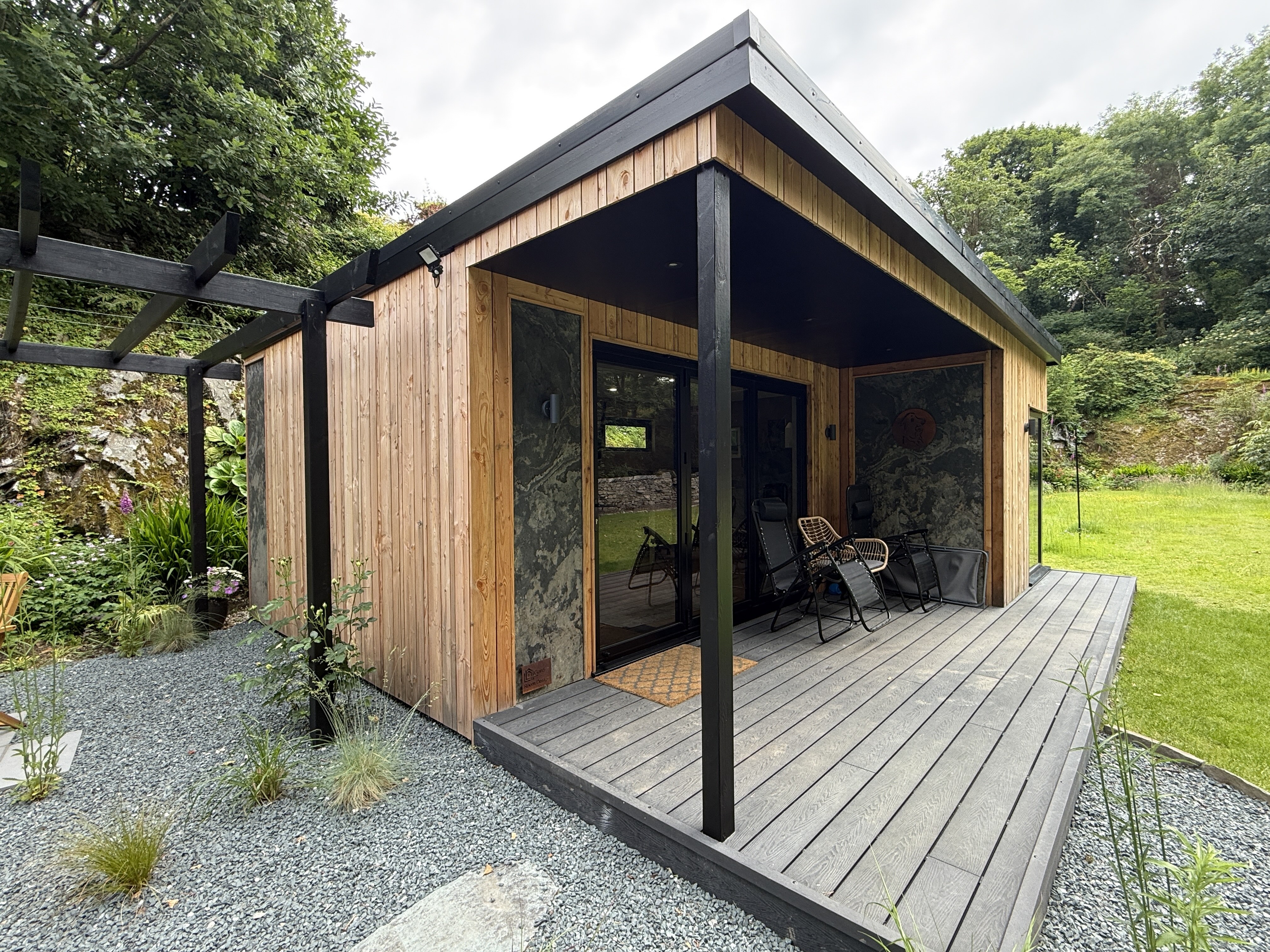
Above £30,000, you start to see real flexibility in layout and finish. Larger floor plans, premium cladding such as the charred timber and copper detailing we used on a recent Milnthorpe Airbnb retreat, integrated solar panels like those on a Kendal office and living room build, and enhanced electrics all become realistic. This is also the budget where multi-use spaces, such as a dual office and snug, start to make practical sense, because there is enough square footage to genuinely separate the two functions rather than cram them together.
A Note on Comparing Quotes
When you are comparing quotes at any budget, ask exactly what is included in the figure. Foundation type, insulation specification, electrics certification, and whether groundworks and access costs are built in or added later all change the real number. We are always happy to walk through what our quotes include, with no jargon and no hidden additions further down the line.
Final Thought
£30,000 is a genuinely good mid-range budget for a properly insulated, year-round garden room in Cumbria, provided the spec matches what the site actually needs. The number on its own does not tell the full story. What it buys does.
If you are weighing up a budget for your own garden, we are happy to talk it through and give you an honest steer on what it would realistically cover on your site.
Related Reading
- How Much Does a Garden Room Cost in the UK? (2026 Guide)
- See a finished example: The Jurd, Kendal, a 6.9m x 4.3m dual office and living room snug
Read through more articles
Below you'll find a steady stream of new blogs containing a wide array of information & updates. We're also more than happy to discuss any questions or queries via a phone call. Our social pages also have lots of useful videos and walkthroughs by the team.

.jpg)



.JPG)
Ready to imagine your own space?
Book your free, no-obligation design consultation today!
Book Your Consultation