Garden Room vs Conservatory: The Honest Comparison
Garden room or conservatory? An honest comparison on cost, comfort, planning and year-round use, from builders working in the Cumbrian climate.
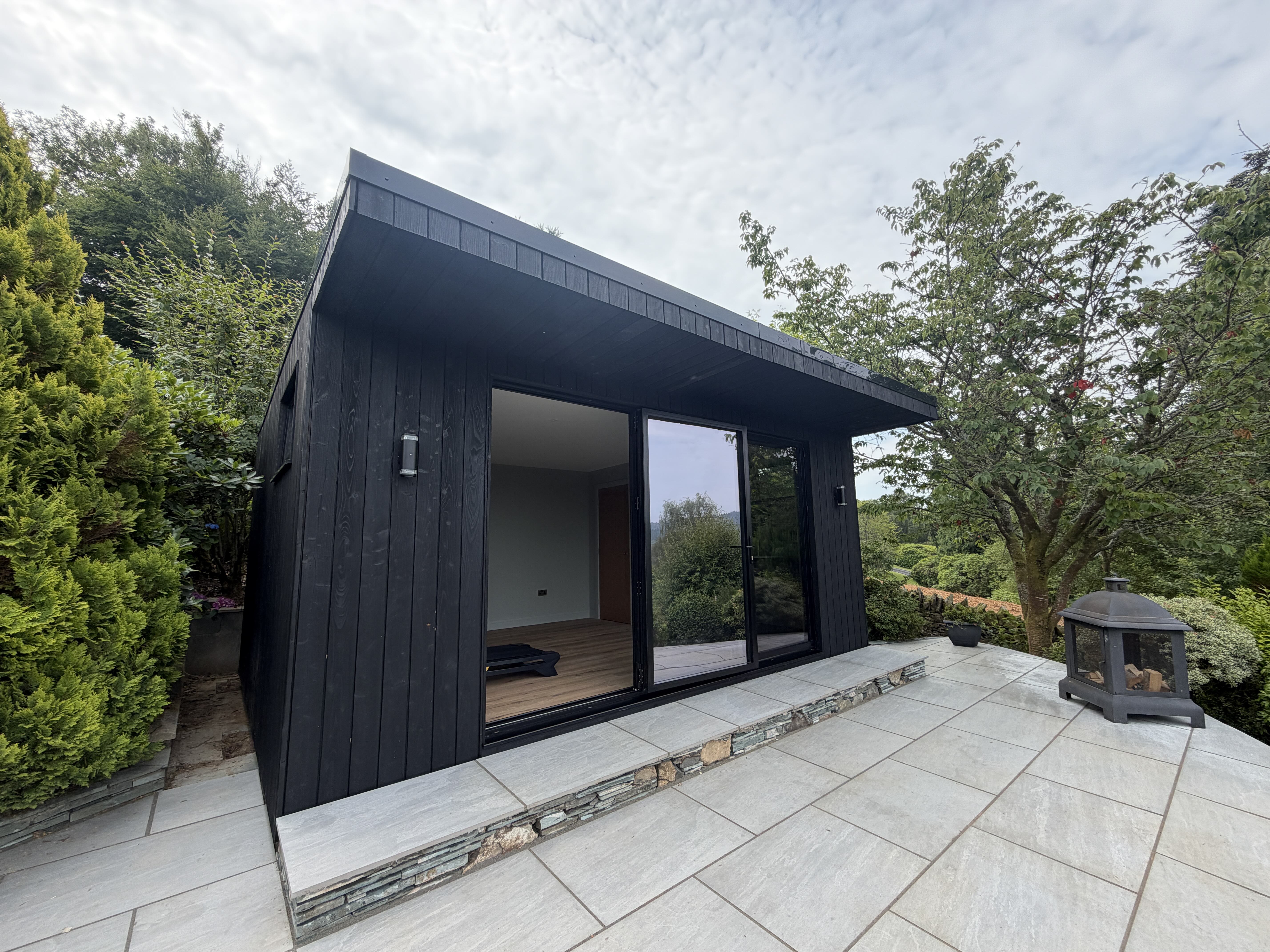
For most people who want a space they can genuinely use all year, a well insulated garden room is the better long term choice than a conservatory. It holds its temperature, works in every season and tends to hold its value better. A conservatory can still be the right call if what you want is a glazed space attached directly to the house, at the lowest possible cost, and you are not too concerned about using it in the depths of a Cumbrian winter. Below is the honest comparison, from a team that builds one of these two things for a living and will still tell you when the other one is the better fit.
What is the difference between a garden room and a conservatory?
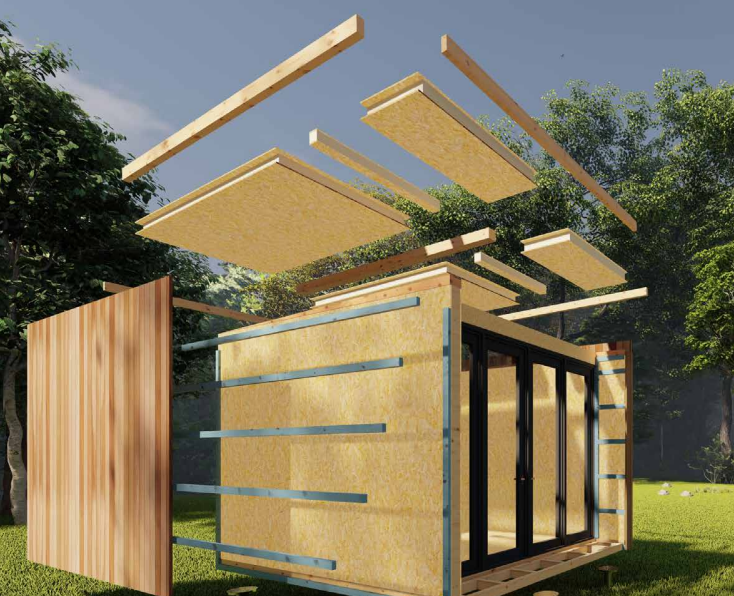
A conservatory is attached to your house, mostly glazed, and forms part of the main building. A garden room is usually a separate, standalone building, fully insulated in the floor, walls and roof, and constructed to the same standard as a proper room in the house.
The simplest way to think about it is this. A conservatory is a glazed extension of your home. A garden room is a small building in its own right. That single difference, attached and glazed versus detached and insulated, drives almost everything else in this comparison. We explain what actually counts as a proper year round build in our post on what makes a garden room usable all year round, but that is the core of it.
Which is warmer in winter, a garden room or a conservatory?
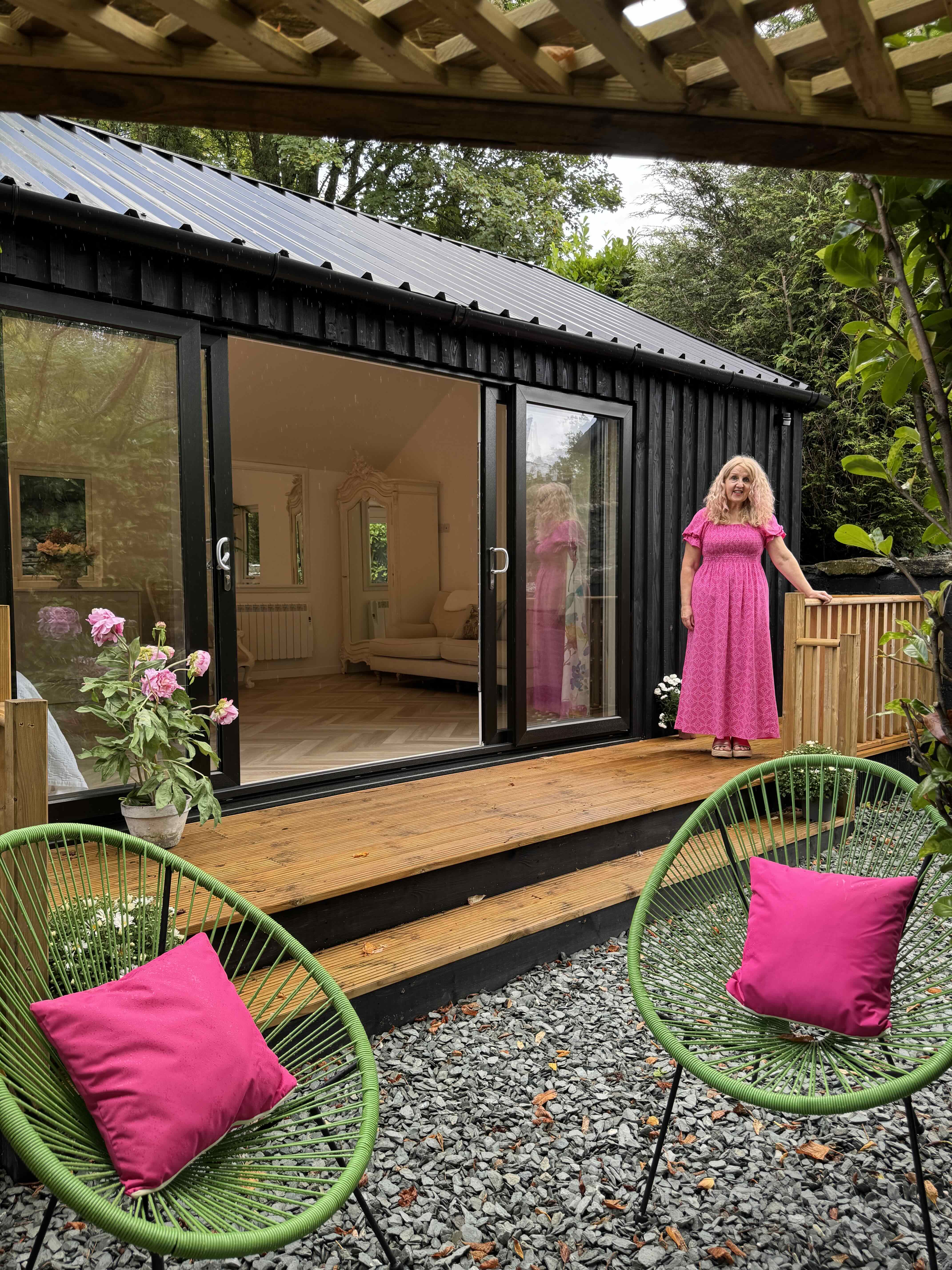
A properly built garden room, comfortably. This is the single biggest practical difference between the two, and it matters more in Cumbria than almost anywhere.
Conservatories have a long standing reputation for being too hot in summer and too cold in winter. A space that is mostly glass, often with a polycarbonate or single glazed roof, struggles to hold a stable temperature. In a Lakeland winter that means a room you avoid from October to March, and in a warm spell it becomes uncomfortable to sit in. Many people end up with a conservatory that is only really usable for a few months of the year.
A garden room built to a proper specification is a different experience. Insulated floor, insulated walls, insulated roof, and good quality glazing sized deliberately rather than wall to wall. That is what lets it stay warm in winter and cool in summer without a fortune spent on heating. What looks right on a drawing has to work in a Lakeland winter, and insulation is what makes that happen.
Which is cheaper, a garden room or a conservatory?
Upfront, a basic conservatory is usually the cheaper of the two. A simple, off the shelf glazed conservatory can be one of the lowest cost ways to add a bit of floor space to a house.
A garden room costs more, because you are buying a fully insulated, standalone building rather than a glazed lean to. But the comparison on price alone misses the point. The right question is cost against how much you will actually use it. A cheaper conservatory you can only use for four or five months of the year is not obviously better value than a garden room you use every day of the year. We go into where the money actually goes in our garden room cost guide, and we are never defensive about price, because built properly this is a long term investment rather than a throwaway purchase.
Do you need planning permission for a garden room or a conservatory?
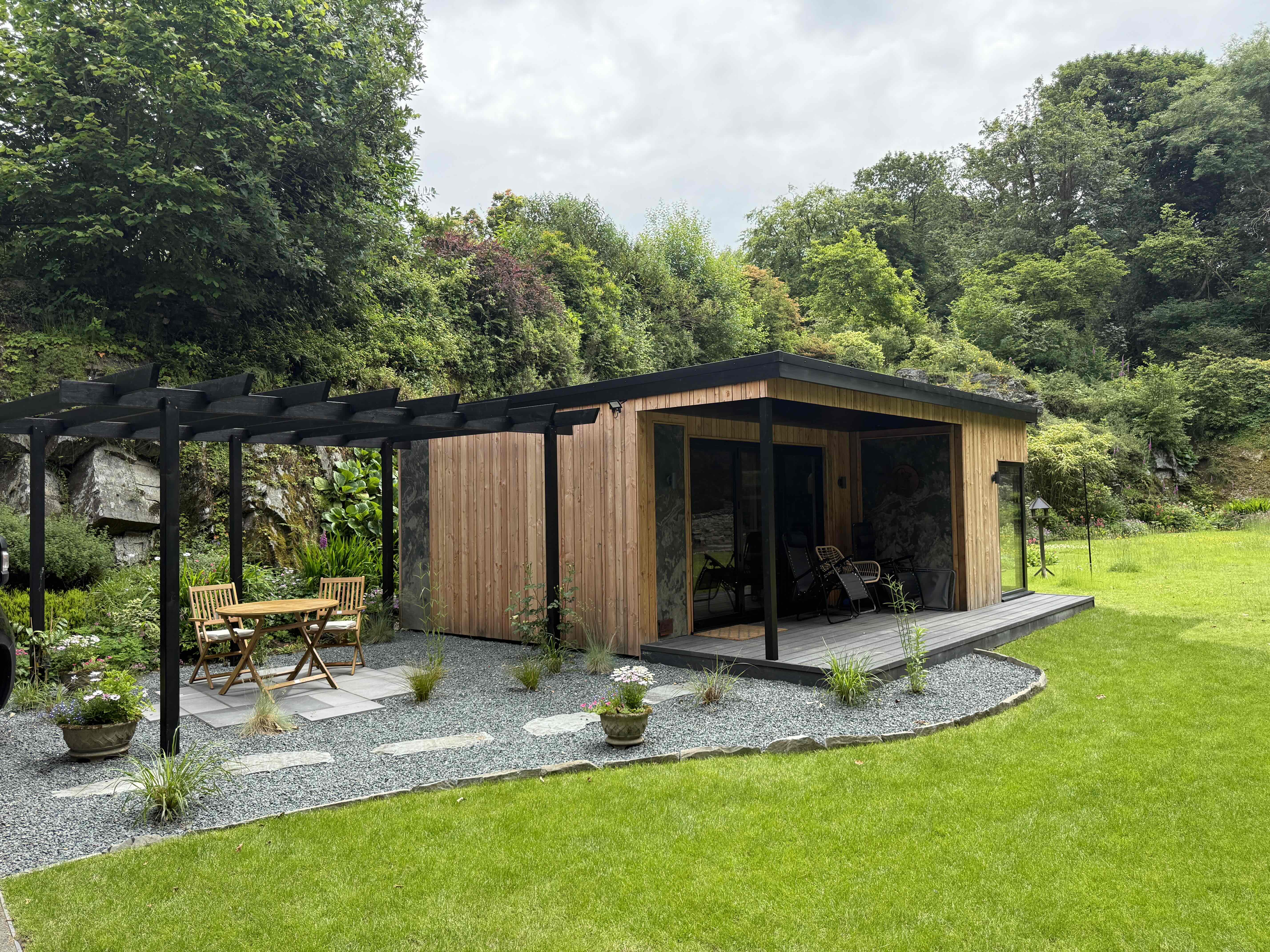
In many cases, neither. Both conservatories and garden rooms often fall under permitted development, which means no full planning application, as long as they stay within the size, height and position limits that apply to your property.
Conservatories have rules around how far they project from the original house and how much of the garden they cover. Garden rooms have their own limits on height and use. And if you are in the Lake District National Park, a conservation area or working with a listed building, the picture is more restricted for both, and worth checking early. We cover the detail in our post on planning permission for garden rooms in the Lake District. The short version is that for a standard build, both are often achievable without planning, but the National Park adds scrutiny that a generic national guide will not tell you about.
Which adds more value to your home?
A quality garden room tends to hold and add value better than a conservatory in the current market. Buyers increasingly see a well built, insulated garden room as a genuine extra room, a home office or a flexible space, and are willing to pay a premium for it.
Conservatories have lost some of their shine over the years, partly because of the temperature problem, and a dated or tired conservatory can even count against a house. That is not to say a good modern conservatory adds nothing, but if resale value is part of your thinking, a proper garden room is usually the stronger asset. One thing we have learned is that the spaces people actually use every day are the ones that show up in the asking price.
Which one lasts longer?
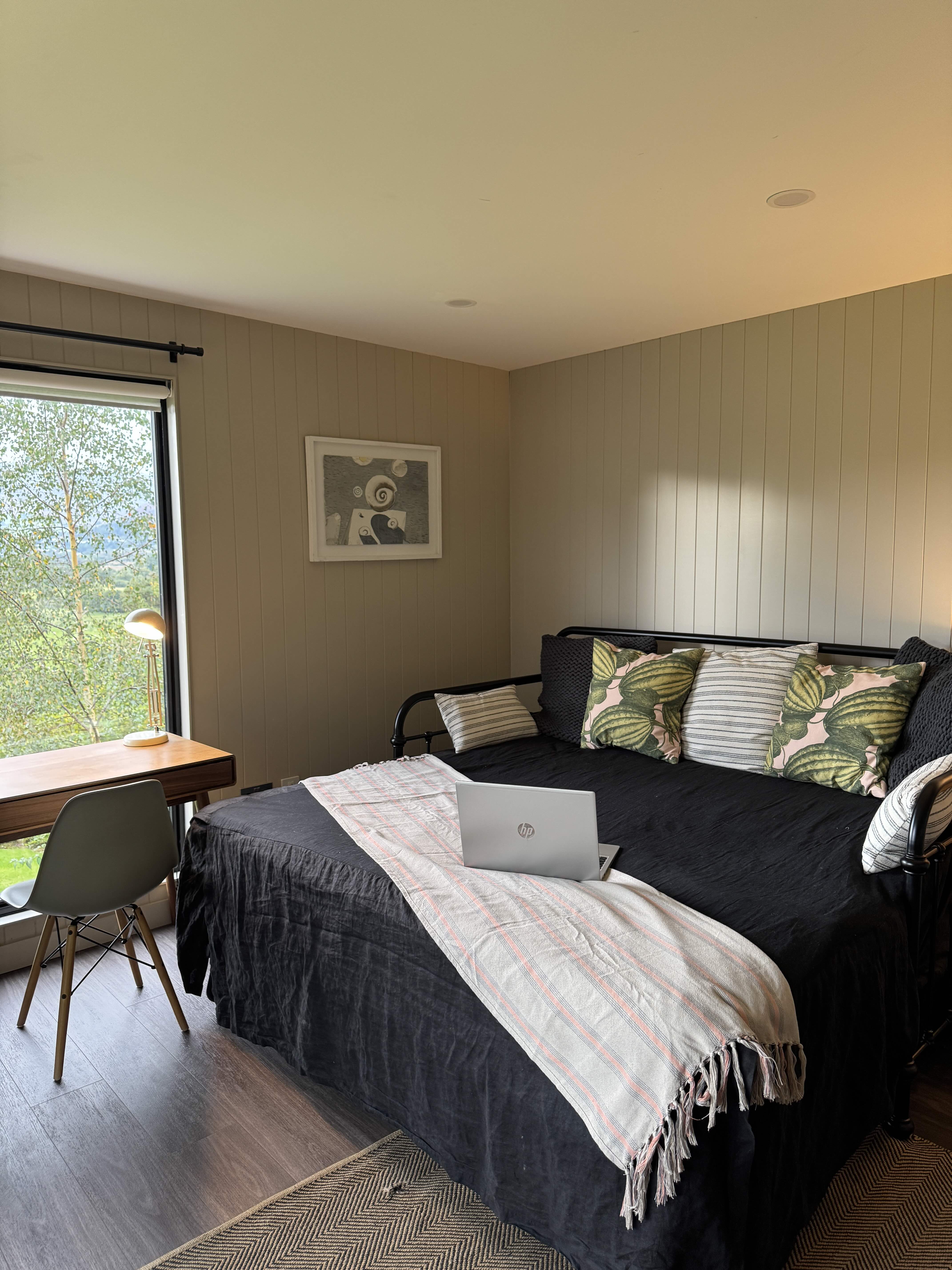
A garden room built properly is a long term structure, designed to last decades with minimal maintenance. Good cladding, a proper roof and insulation that keeps the building dry and stable all contribute to that.
Conservatories can last a long time too, but the glazing, seals and roof are more exposed and tend to need attention sooner, and older polycarbonate roofs in particular age quickly in an exposed, wet climate like ours. In Cumbria, where the weather does not go easy on anything, build quality tells over time.
Which is better for a home office?
A garden room, in almost every case. A home office needs to be a stable, comfortable space you can work in every day of the year, and it usually needs power, data and a bit of separation from the noise of the house. A garden room delivers all of that. A conservatory rarely does, because the temperature swings make it hard to work in for large parts of the year, and a room full of glare is not a comfortable place to look at a screen.
If working from home is the main reason you are adding space, this is not really a close call. A properly built garden room is designed to be used and worked in all year, which is exactly what a conservatory struggles to offer.
Can I replace a conservatory with a garden room?
Yes, and it is something we are asked about more and more. Plenty of people have a tired conservatory that they barely use, and a garden room is often a far more useful replacement for the same footprint of garden. Because a garden room is a standalone building, it does not have to sit exactly where the old conservatory was, which gives you more freedom over position, orientation and the view.
The one thing to check early is the ground and the drainage left behind, and whether any planning conditions attach to the change. We see this a lot on site, an old conservatory comes down easily enough, but what is underneath it decides how the new build goes in. A site visit is the only reliable way to know.
Garden room vs conservatory: side by side
A quick summary of how the two compare on the things that matter most.
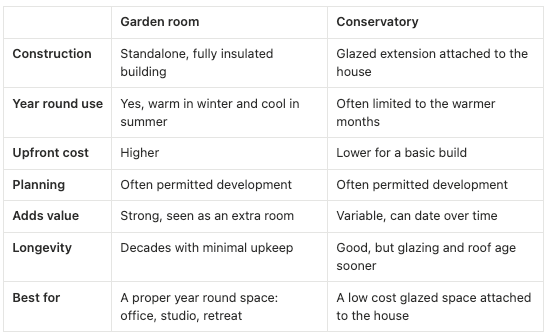
So which should you choose?
If you want a space you will use all year, that adds real value and lasts, a garden room is the better long term decision, and in the Cumbrian climate the insulation advantage is hard to overstate.
A conservatory still wins in one clear situation. If you specifically want a glazed room physically connected to your house, you are working to the tightest possible budget, and you are content using it mainly in the warmer half of the year, it can be the sensible choice. We would rather tell you that honestly than pretend there is never a case for it.
For most of the people who come to us, though, the deciding factor is that they want to use the space in November as much as in June. That is the point where the comparison stops being close.
Talk it through
If you are weighing up a garden room against a conservatory and want a straight answer for your own situation, message us to start the conversation. We will tell you honestly which one makes sense for what you want to do with the space.
Read through more articles
Below you'll find a steady stream of new blogs containing a wide array of information & updates. We're also more than happy to discuss any questions or queries via a phone call. Our social pages also have lots of useful videos and walkthroughs by the team.

.jpg)



.JPG)
Ready to imagine your own space?
Book your free, no-obligation design consultation today!
Book Your Consultation